

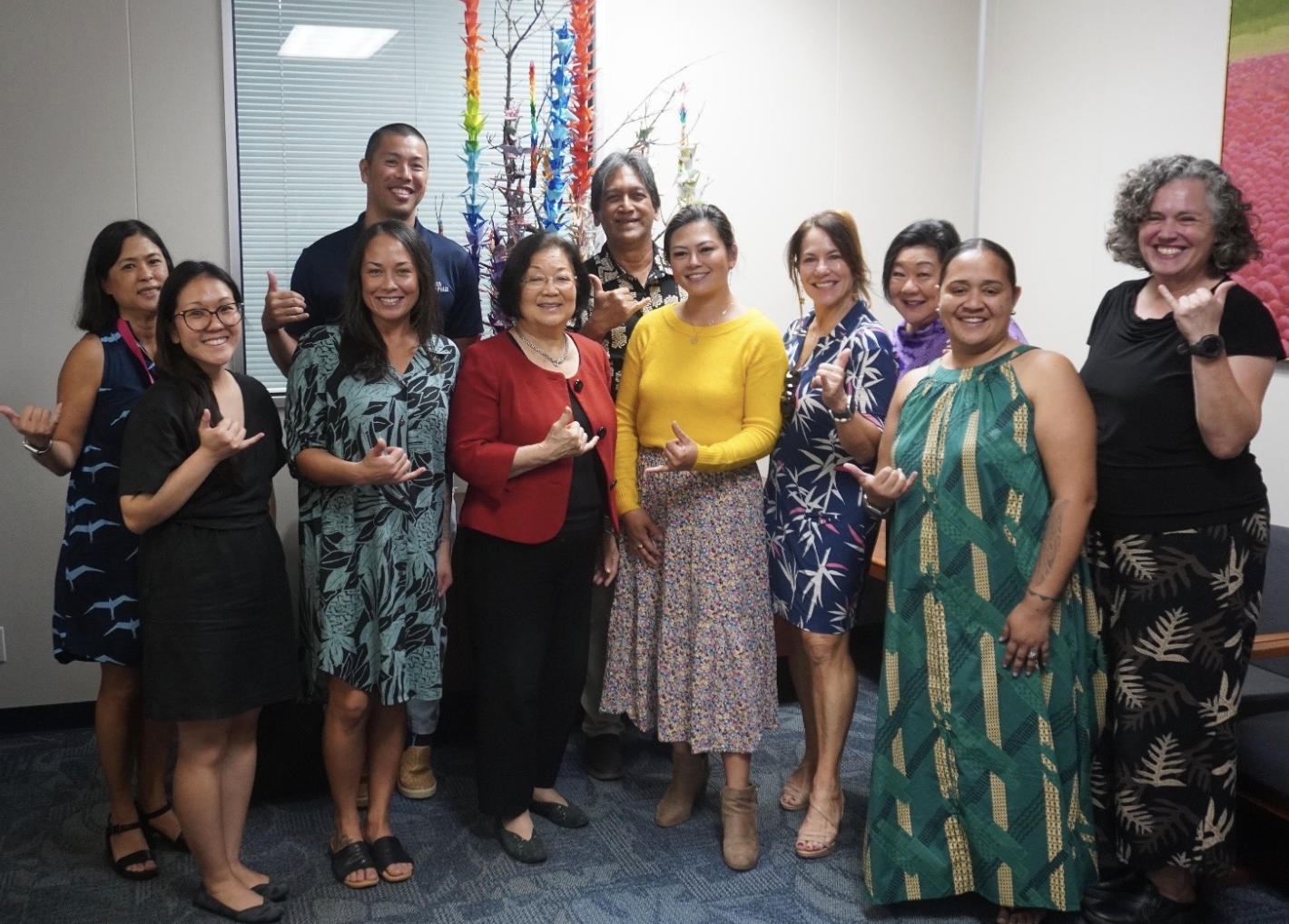
On January 20, 2026, education leaders, nonprofit partners, and advocates from across the state gathered for a critical round table discussion with Senator Mazie Hirono to address the urgent challenges facing Hawaiʻi’s education system. At the center of the conversation was growing concern for the future of community schools in Hawaiʻi, and the essential role they play in supporting students, families, and educators amid mounting uncertainty.
This was not a theoretical conversation. It was grounded in lived experience, frontline realities, and a shared understanding that schools cannot shoulder today’s challenges alone.
Why Community Schools in Hawaiʻi Are Essential
Community schools in Hawaiʻi are more than school sites, they are community hubs designed to reconnect education with family, culture, health, and place. At their core, they “give the school back to the community,” creating conditions where students can thrive both inside and beyond the classroom.
Kai Mead, Director of Education Services at the Pacific American Foundation (PAF), shared how community schools provide character-building opportunities outside of the traditional school day, opportunities that strengthen belonging, purpose, and connection.
Through the community schools approach in Hawaiʻi, students and families gain access to:
Family Resource Centers offering food distribution, clothing, and support with job, SNAP, and medical applications
Integrated Health Services, coordinating on-campus access to physicals, exams, and mental health care through trusted partners
Teacher Support and Well-Being, addressing burnout and high turnover through community-based care and appreciation
Cultural and Community Connection, including ʻohana nights, internships, and place-based learning that connect students to culture, land, and community
These supports are not extras. They are the foundation that allows learning to happen, especially in communities navigating economic pressure, health challenges, and systemic inequities.
Federal Funding Cuts and the Threat to Community Schools in Hawaiʻi
Senator Hirono spoke candidly about what she described as an “assault on education programs in Hawaiʻi,” emphasizing that the current political climate poses real risks to the systems community schools rely on.
Key concerns raised during the round table included:
Funding Uncertainty: Approximately $250 million, nearly 11% of the Hawaiʻi DOE budget is at risk, with programs such as Title II, Title III, and Title IV-A facing disruption or reassignment
Interagency Confusion: Education programs may be shifted to other federal departments without clear agreements, staffing, or expertise in place
Lack of Transparency: Many educators and communities are not receiving timely or clear communication about what is changing and when
For community schools in Hawaiʻi, this uncertainty is particularly damaging. These models require stability, long-term investment, and trust. Abrupt funding shifts undermine partnerships, staffing, and progress already underway.
What Educators and Communities Are Seeing on the Ground
Leaders from across the state shared the real-world impacts of these policy shifts on schools and families:
Teacher Workforce Strain: Concerns about teacher safety, campus security, and reliance on J-1 visa teachers to address chronic shortages
Afterschool Program Risk: Roughly $6.5 million in afterschool funding is at risk—programs that many community schools depend on to support students beyond the school day
Immigration and Family Safety: Stories of ICE interventions underscored the fear and instability some families are experiencing, directly affecting students’ ability to learn
These realities reinforced a central truth: schools cannot respond to these challenges alone. Community schools in Hawaiʻi exist precisely to address the interconnected academic, social, emotional, and cultural needs of students and families.
A Call to Advocate for Community Schools in Hawaiʻi
The round table concluded with a clear call to action. Advocacy matters. Senator Hirono urged educators, organizations, and community members to speak up, share stories, and use accessible platforms to raise awareness. With approximately 170,000 Hawaiʻi students impacted, silence is not neutral, it carries consequences.
Community schools work because they are built on relationships, time, and trust. They improve attendance by addressing root causes. They support teachers so they can remain in the profession. They help students thrive academically while also building character, belonging, and purpose.
If Hawaiʻi is serious about supporting keiki, families, and educators, then community schools in Hawaiʻi must be protected, funded, and championed.
Now is the moment to connect the dots, defend what works, and ensure our schools remain places where students can thrive, academically, emotionally, physically, and spiritually.